How to Get Detergent Stains Out of Clothes: Effective Removal Guide
Contents
- Key Takeaways
- Identifying Detergent Stains
- Characteristics of Detergent Stains
- Common Fabrics Affected
- Removing Detergent Stains
- Home Remedies for Stain Removal
- Commercial Stain Removers
- Special Considerations for Delicate Fabrics
- Laundry Practices to Prevent Detergent Stains
- Troubleshooting Laundry Detergent Residue
- Adjusting Water Temperature and Volume
- Maintenance of Washing Machine
- Sources
Detergent stains on clothes can be both puzzling and frustrating, especially when your goal is to clean your garments, not mar them with more spots.
Whether it’s the white streaks from powder detergent or the blue splotches left by liquid laundry soap, these marks are a common laundry mishap.
The good news is that with the right approach, they can be removed effectively. Removing detergent stains from clothes generally involves a few household items and a bit of elbow grease.
Understanding the different types of detergent stains and how they occur is the first step toward tackling them head-on. It’s important to act quickly once you’ve spotted a stain, as the longer it sits, the more stubborn it becomes.
Key Takeaways
- Acting quickly can improve chances of completely removing detergent stains from clothes.
- Common household products can be effective in treating and removing detergent marks.
- Proper laundry practices are crucial in preventing future detergent stains on garments.
Identifying Detergent Stains
Before attempting to remove detergent stains, it’s imperative to recognize their specific characteristics and understand which fabrics are most prone to staining. This knowledge will facilitate more effective treatment.
Characteristics of Detergent Stains
Detergent stains emerge differently depending on whether you’re using liquid detergent or powdered detergent.
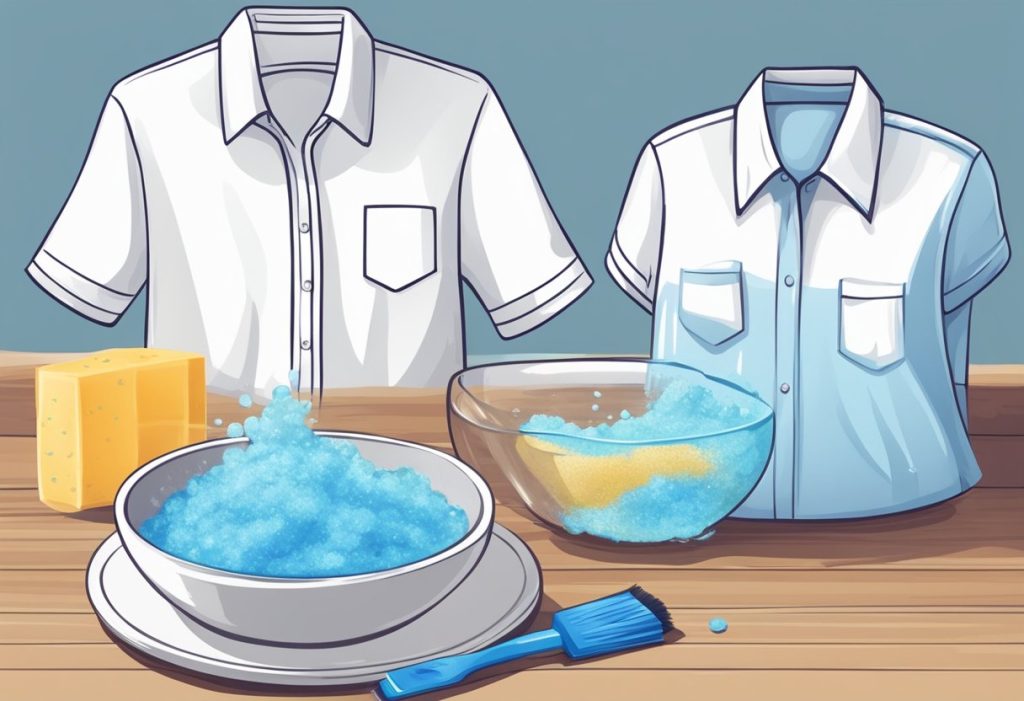
For liquid detergent, stains typically manifest as blue or white splotches that can impart a waxy feel to the fabric. Powdered detergent might not dissolve entirely and can leave behind a grainy or chalky residue, especially after a cold wash.
Stains can be particularly noticeable on:
- White clothes, where blue stains from liquid detergent stand out
- Dark fabrics, which can show white marks or streaks
Common Fabrics Affected
Various types of fabrics react differently to detergent stains:
- Linen and wool: More absorbent materials that may hold onto detergent and require multiple rinses.
- Silk, rayon, fur, and suede: Delicate in nature, these fabrics can be easily marked and may need gentle, specialized cleaning methods.
To identify the stains on these fabrics, look specifically for discoloration or residue that contrasts with the fabric’s original color and texture.
Removing Detergent Stains
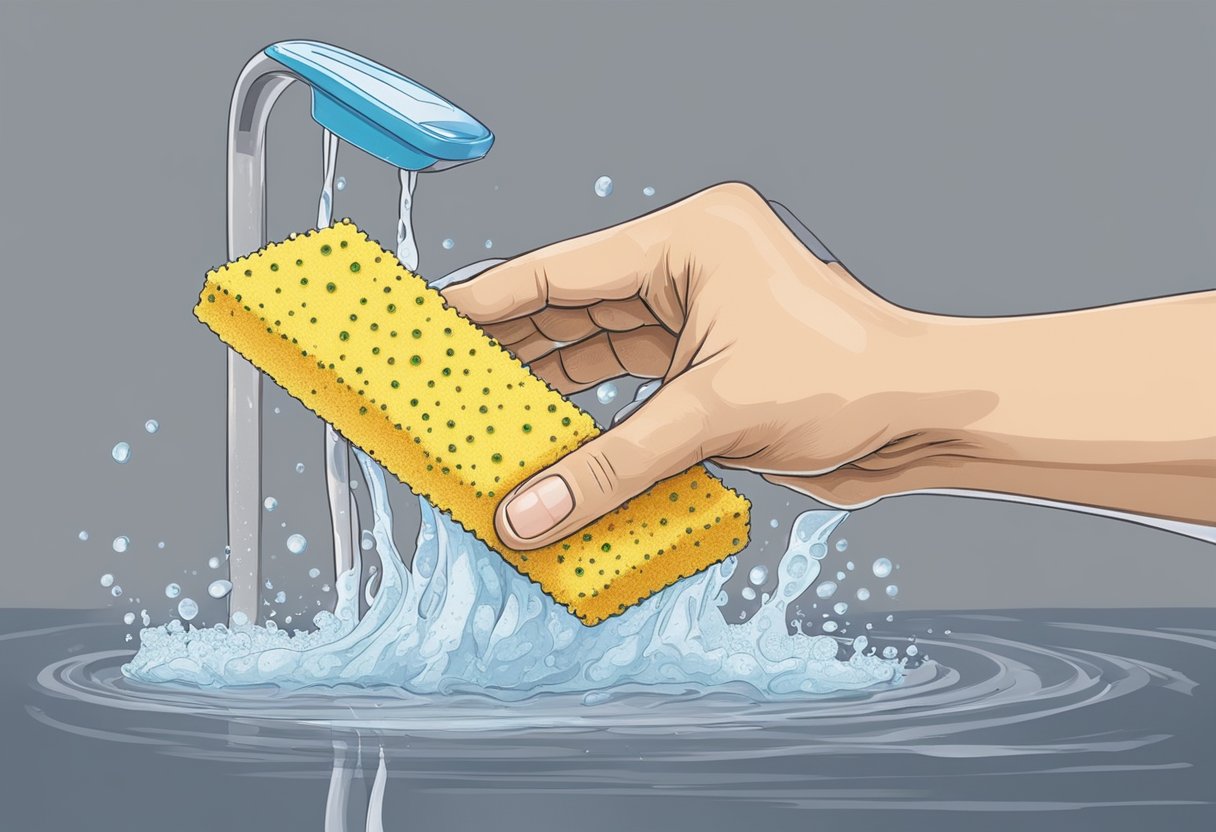
To effectively remove detergent stains from your clothes, you can employ simple home remedies, commercial stain removers, or special techniques for delicate fabrics. Each approach has its advantages depending on the type of fabric and stain.
Home Remedies for Stain Removal
Vinegar Solution:
- Mix 1 cup of white vinegar with ¼ cup of water.
- Soak the stained garment in this solution, then rub the fabric against itself to loosen the detergent.
Baking Soda Paste:
- Create a paste using baking soda and water.
- Apply directly to the stain and gently scrub.
Alcohol Method:
- Apply rubbing alcohol to the stain.
- If your garment can handle warm water, soak it after the application of alcohol for about 10 minutes.
Commercial Stain Removers
Oxygen-based Pretreatments:
- Apply an oxygen-based stain remover to the stain as per product instructions.
- Allow it to sit for the recommended amount of time before washing.
Specialized Detergents:
- Use a commercial stain remover detergent designed to treat tough stains.
- Follow the specific guidelines provided on the product’s label for best results.
Special Considerations for Delicate Fabrics
Handwashing:
- For delicate items, handwash the fabric with a gentle touch using degreasing dish soap or a mild bar soap.
Avoid Harsh Chemicals:
- Steer clear of harsh chemicals like paint thinners or fabric softeners that might cause further staining or damage delicate fibers.
When attempting to remove detergent stains, it’s important to first check the garment’s care label and test any cleaning solution on an inside seam or hem to prevent damage.
Laundry Practices to Prevent Detergent Stains
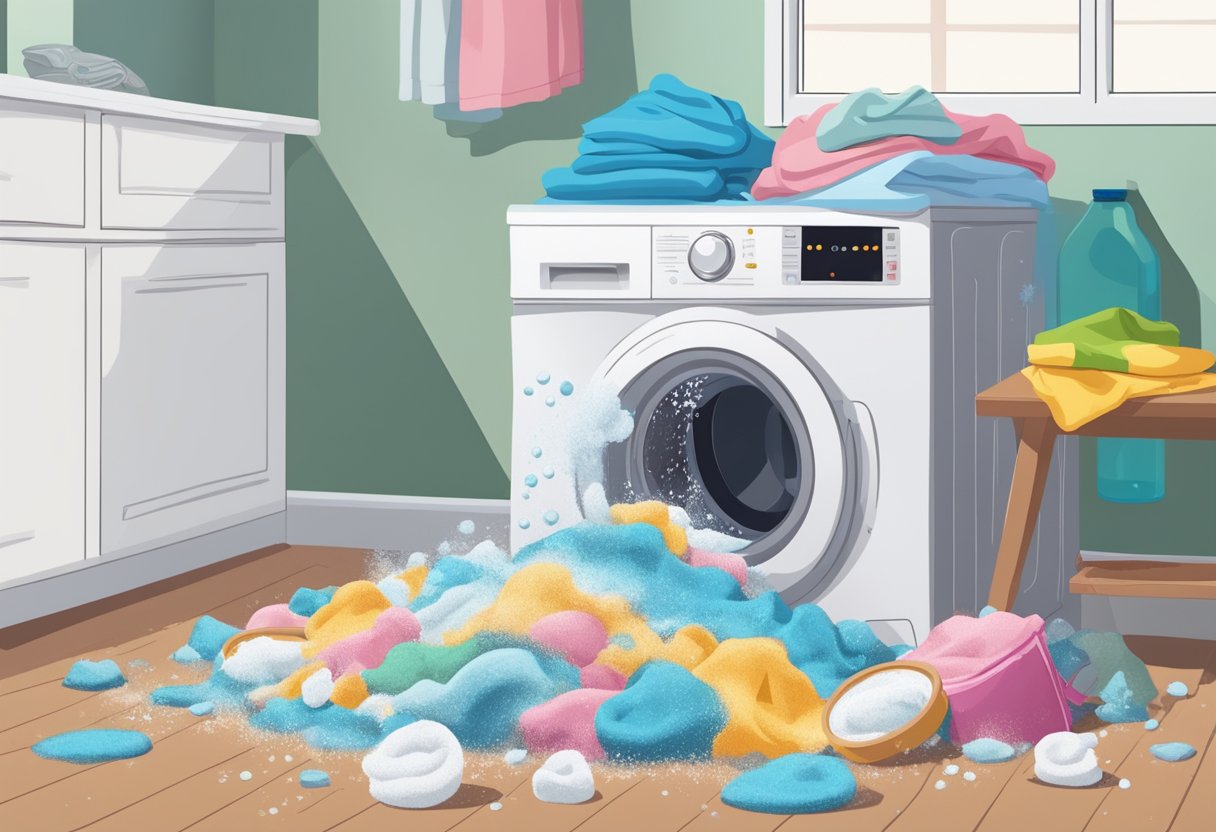
Effective laundry practices are the cornerstone of preventing detergent stains on your clothes.
Here are some straightforward tips to keep your garments free from undesired marks:
- Measure Your Detergent: Always use the amount of detergent recommended on the label, a basic step in Texas A&M AgriLife Extension’s laundry guidelines. For liquid laundry detergent or laundry soap, use the cap or cup provided to measure accurately. Using too much detergent can leave residue on your clothing.
- Choose the Right Detergent: Opt for a detergent made for your washing machine type, such as an HE detergent for high-efficiency washers, and suitable for your fabrics.
- Dissolve Properly: Ensure the detergent is fully dissolved in the water before adding your clothes. For powdered detergents, it might help to start the washing cycle with water and detergent to dissolve it before loading clothes.
- Avoid Overfilling: Do not overstuff your washing machine. Clothes need to move freely during the washing cycle for the detergent to be rinsed out properly.
- Use Fabric Softener Correctly: Dilute liquid softener and add it during the final rinse, and put dryer sheets in at the start with a cold dryer to avoid oily spots.
- Final Rinse Check: After the final rinse, check to see if the water is clear. If you detect suds, run an additional rinse cycle to remove any potential detergent residue.
Remember, thorough rinsing and the right amount of detergent are key to preventing laundry detergent stains.
Troubleshooting Laundry Detergent Residue

Laundry detergent residue can be frustrating, but you can effectively tackle it with the right water temperature and washer maintenance. Here’s how to attack the problem.
Adjusting Water Temperature and Volume
Cold Water:
- Cold Water and Hard Water: Powdered detergent dissolves poorly in cold water, and hard water makes detergent less effective. Try warm water if the care label allows, or switch to a liquid detergent.
- Volume Check: Make sure the load isn’t too large for the water level. Too little water for the load size makes it harder to rinse detergent away.
Warm Water:
- Optimal Dissolving: Warm water is more effective at dissolving detergent, particularly if you’re dealing with a high-efficiency (HE) washing machine.
- Residue Removal: If residue persists, soak the affected clothes in a bucket with a 1:4 solution of white vinegar to warm water before rewashing them.
Maintenance of Washing Machine
Routine Cleaning:
- Perform monthly cleanings of your washing machine to prevent residue buildup which can redeposit on clothes.
- Use a washer cleaner or the cleaning cycle your washer’s manufacturer recommends.
Detergent Dosage:
- Regularly check the manufacturer’s guidelines to ensure you’re using the correct amount of detergent.
- Avoid overuse of detergent as this increases the likelihood of residue being left on your clothes.
Remember that removing laundry detergent residue often requires a balance of the correct water temperature and volume, along with a well-maintained washing machine. Regularly check your laundry habits and machine condition to keep your clothes residue-free.
Sources
- Quick Stain Removal Guide: Washable Fabrics, Texas A&M AgriLife Extension
- Removing Clothing Stains, New Mexico State University Cooperative Extension